
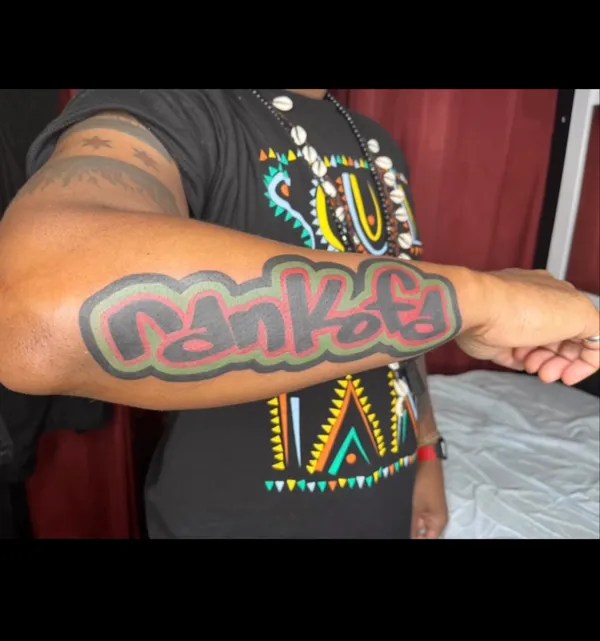
By now, you’ve probably noticed that I’ve introduced myself and sign off as Rankofa. On my About page at rankofa.com, I briefly share how I created the name Rankofa and what it means. There’s more to the story than what I offered there, so I’ll give you the full process and breakdown the inspiration.
As you might be able to surmise, I’ve always been fascinated with names. I’ll start from the beginning…
I was given the name Randall at birth, named after my father Randall Bruce DeVaul, Sr. For much of my life, though, I went by the shortened version, Randy.
As a kid and avid WWF wrestling fan, I felt a serious connection to “Macho Man” Randy Savage (R.I.P.). We had the same name, and in my mind, I was him. On the recess football gridiron I was none other than Randall Cunningham, the legendary Philadelphia Eagles quarterback.
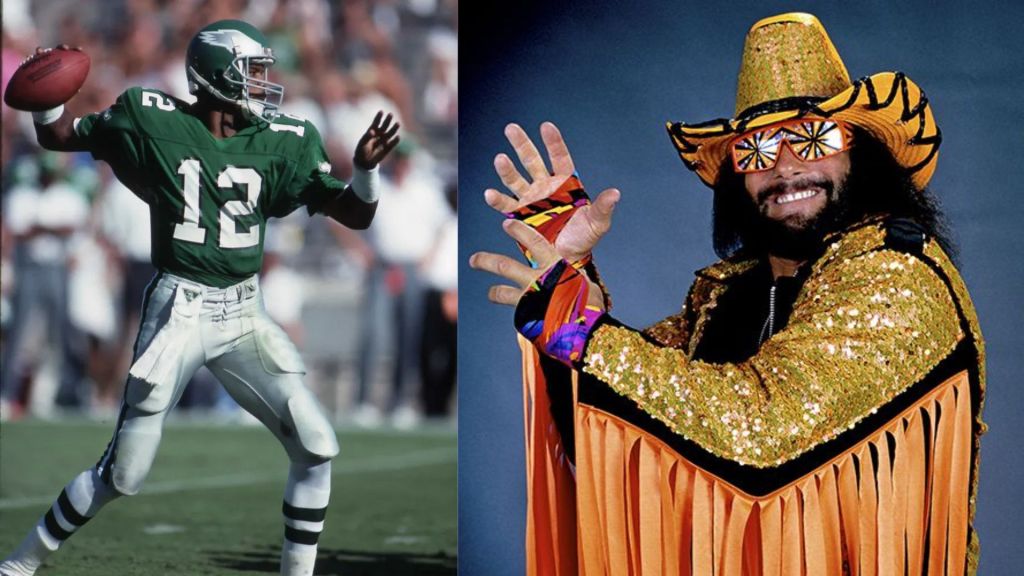
To have the same name as these greats was to associate myself with similar greatness.
I liked my name. Nobody had trouble pronouncing it. It sounded fun and had a jovial ring to it, maybe because it rhymed with candy, and everybody likes candy.
Then came the internet, and with it, AOL screen names! My older cousin, whom I looked up to as cultural expert on all things cool, used to always call me “Randogg.” Randogg15 became my online persona in the chatrooms. In these pre-teen days, I just looked at names as cool labels. I hadn’t considered the meaning of my birth name, or why I felt an affinity toward other Randy’s. However, later in life I realized the power that comes in a name, and more importantly, naming ourselves.
To explore this power, let’s consider the creation story as presented in The Bible. Whether you accept it as gospel or mere allegory is beside the point, because there’s a deeper concept I’d like to call forward.
“In the beginning,” before He (I still haven’t heard a good answer for why God is referred to as a “He”, other than patriarchy. I digress.) began creating the natural world, God first created light and distinguished it from darkness through naming. “God called the light ‘day,’ and the darkness he called ‘night.’” According to the Biblical tradition, this is the first act of naming ever. Next, He created the “vault” which He called “sky,” the water He called “seas,” the dry ground “land.” So if we take inventory so far, the first names ever in the universe were day, night, sky, land, and seas.
God continued creating the planets, trees, animals and such. Saving the best for last, God created Man. And what was one of the first responsibilities, or shall I say privileges, God gave his new creation? The power to name everything in creation. From my interpretation, the New International Version of the Bible doesn’t say where Adam and Eve got their names. It just is, I suppose.
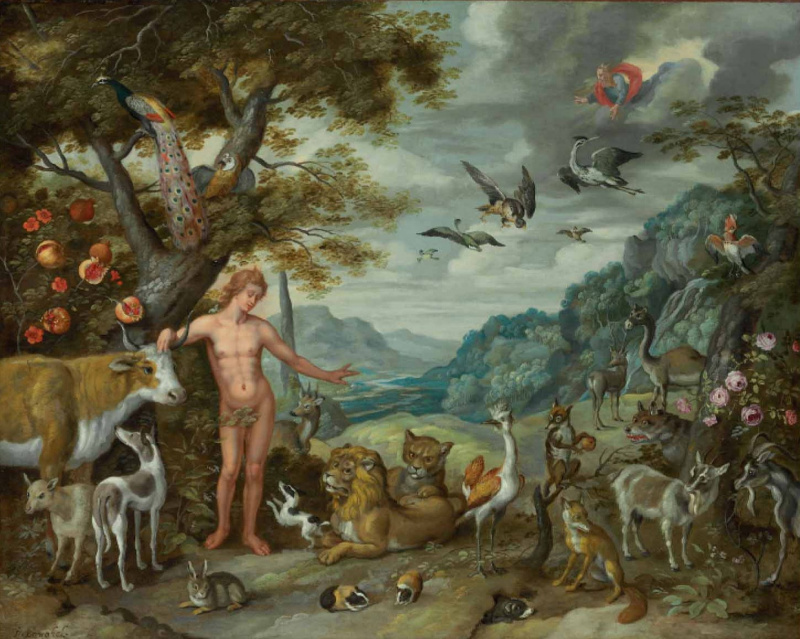
1630’s painting “The Story of Adam and Eve: Adam Names the Animals” by Jan Brueghel the Younger
Again, doctrine aside, if we were to look at this particular origin story from a purely symbolic lens, we see that even God had to name things. He created something, and then named it for classification purposes. He created Man, and then told Man to name the rest of creation. Thus, there’a connection between our existence and what we call the things around us. It’s a right given to us directly from the Creator.
Accordingly, I believe that we share a co-creatorship with the Creator. We were put here to create, to make new things. Probably the clearest example of this is the naming process for newborns.
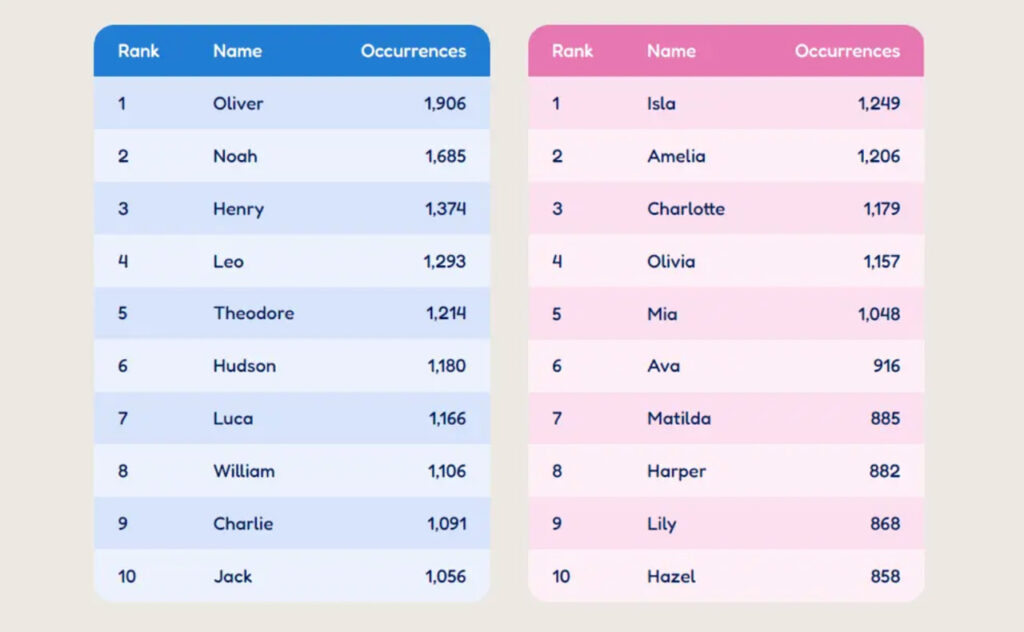
Before babies even come out of the womb, parents have attached a name to the new being. Countless sites are dedicated to baby name meanings and will even chart the name’s popularity over time.
Some emphasize the distinction between science and religion and draw a hard line between the two. But even scientists observing phenomena in nature employ this naming process and essentially co-create.
We discovered a new planet! Let’s name it.
We discovered a new species of plant or animal! Let’s name it.
We discovered a new element! Let’s name it.
Essentially we are doing what Adam was commanded to do in the Bible. Naming people and things is an act of divine labeling. It helps us to make meaning of the world and properly classify its components.
More personally, it is a sign of emotional intelligence to name our experiences, to call emotions, thoughts, and feelings as they are and as we see them, in the process honoring the feelings and perspectives of others. The same occurs with pronouns. My most recent job was an environment of preferred pronouns in email signatures and people contributing to meetings with, “I just want to name that…”
This is a step in the right direction, but I feel like there’s still something about the naming process that is external to us.
One thing I’ve experienced as a teacher is that many of my students didn’t even know what their name meant. Perhaps my favorite part of teaching was getting to know students and, the first step of that process, learning their names through taking attendance each day. And I’ve seen some very interesting names in my time, to say the least.

Key and Peele’s “Substitute Teacher” sketch hilariously captures the awkwardness of taking attendance and trying to pronounce students’ names
I would often ask my students, “What does your name mean?” Unfortunately, only a very select few could answer that question. Why is this unfortunate? Because we go through our entire lives being called a name and don’t know what it means. It’s set in stone because our parents gave it to us. Doesn’t this relinquish some of our divine power? I can name everything around me, can name my experiences, can name my pronouns, but have little to no interest in renaming myself or can’t identify with the name assigned to me? Hell, we may as well be reduced to a number in that case. The future is nigh…the robots are coming.
Accordingly, I’ve taken increased interest in making sure my name means something and resonates with me strongly. As I’ve stated elsewhere on this blog, one of my main interests is knowing myself deeply and expressing myself to the fullest.
While Randy was a nickname given to me, I felt consternation when I met someone from England who glibly commented, “Oooh, Randy! Are you feeling raaanndyy, Randy?!”

I’m not a huge Austin Powers fan, but I quickly learned that randy meant “horny or lustful.” That’s not good, especially considering that I had converted to Islam and only wanted to be associated with the most virtuous characteristics. Though it’s not a requirement to change one’s name to an Islamic one, brothers would always ask me, “What’s your name?” Randy, I’d respond matter-of-factly. “Oh brother, you should choose a Muslim name! It’s better for you!” So I eventually succumbed and legally changed my government name to Abdus-Salam Ibrahim bin Randall, which means “Servant of the Source of Peace, from the family of Abraham, son of Randall,” the latter to honor my father since I was no longer a Junior.
(Author’s edit: Since writing this blog post, I’ve legally changed my name BACK to my birth name. It just feels better.)
On a lighter note, I always enjoyed finding portmanteau with my name Randall. I would find different ways to “flip the Ran” as I called it.
My longtime email address is Rantastic, a derivative of fantastic.
My writings and thoughts became my Ranifesto, derived from manifesto. (Hence the name of this blog.)
My rebirth, I labeled the Ranaissance.
One of my favorite and most endearing flips, though, is Rankofa.
I went to Africa the summer after my junior year in high school and it was by far the most spiritual experience I’ve ever had. I felt a deep connection to the people I encountered, the land, and it really helped me realize the “African” in African-American. It sparked a quest to discover my roots.
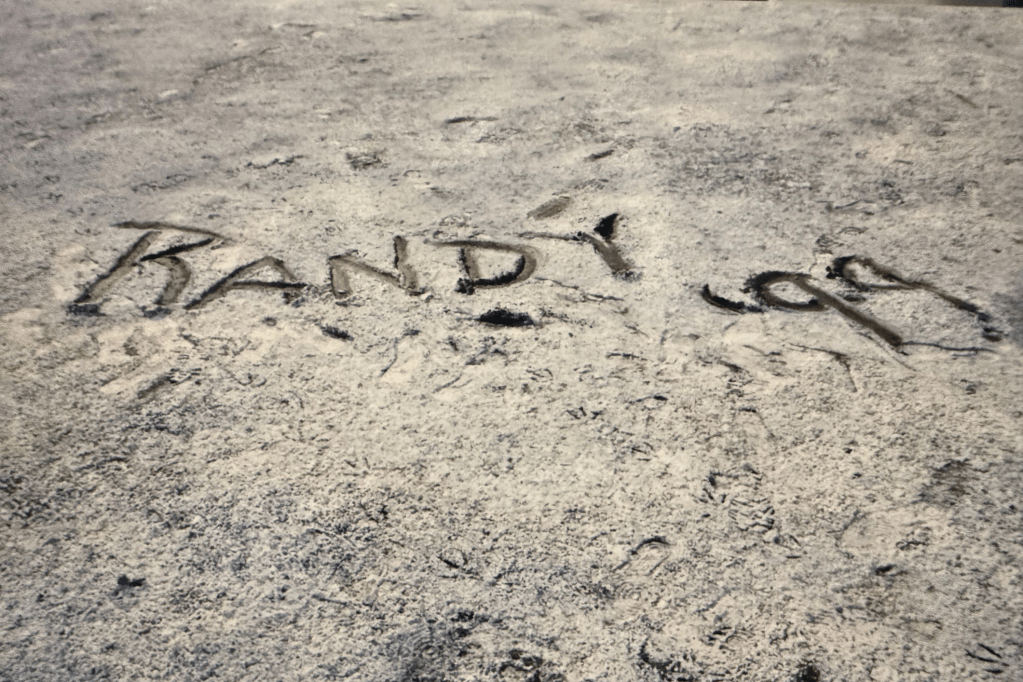
I carved my name into a beach somewhere in Kenya’s Great Rift Valley.
It was the spirit of Sankofa! Sankofa comes from the Twi language in Ghana and means “to go back and get it.” It is rooted in retrospection, learning, and listening. The spirit of sankofa is to consider the lessons of our ancestors and use them as building blocks towards paving our own futures.
“A people without the knowledge of their past history, origin and culture is like a tree without roots.” – pan-Africanist and revolutionary leader Marcus Garvey
Rankofa became my personalization of that experience. The more I move forward in life, the more I feel myself being called to remember and make meaning. The sacrifices before me, my own journey and how far I’ve come. It is me naming my experiences. Rankofa is more than just an artist name; it is me stamping my existence in the universe. Every song I put out, every blog post I write, stamped Rankofa!
I’d be honored if you shared your name with me. What does it mean?
Peace and Love,
Rankofa


 The Go & Get It
Leave a comment