
and does this loaded question even matter anymore?
Knowledge of self. The first time I heard this phrase was on the classic Hip Hop album Mos Def and Talib Kweli Are Blackstar. I was 15 when it was released in 1998. I remember laying on the bed watching BET’s Rap City, absorbing the hits of the time and, more deeply, studying the culture of Hip Hop. I considered myself a Hip Hopper, a purveyor of only the realest rap, vanguard of the Underground. I backpacked wherever I went, always had a sharpie in tow to perfect my tag, and kept my notebook full of raps. I eschewed all of my name brand clothes, notably DKNY and Tommy Hilfiger, in favor of Triple 5 Soul, Ecko, and Akademiks, brands I considered synonymous with Hip Hop culture.
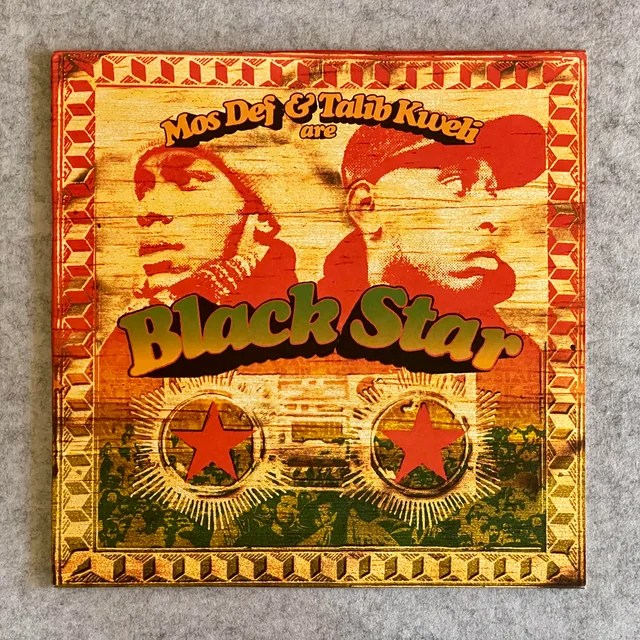
So when I saw the video for Blackstar’s lead single “Definition,” I immediately fell deeper in love with Hip Hop. To me, it was the essence of Hip Hop. The flows, the feel, the beat, the way they dressed. I needed more! And so, I took my allowance money to Coconuts (R.I.P.) to buy the full CD.
Needless to say, the shit rocked and got the heaviest of rotation in my collection! The 8th track was, and probably still is, one of my favorites: “K.O.S. (Determination).” Talib Kweli came out the gates droppin’ gems of course. “So many MC’s focusing on black people extermination/we keep it balanced with that knowledge of self, determination!” Later, he starts verse 2, “Knowledge of self is like life after death/with that, you never worry about your last breath.”
The themes of the song were inspirational and educational to my young mind, but what they further did was plant the seed of knowledge of self in my brain. What does it mean to know oneself? As an only child, I had a lot of time to myself, so introspection was a regular activity. Who was I? And what did that mean for the way I dressed and talked, the things I believed?
I won’t fully list out the extent of my journey here, though I will share that Hip Hop, most notably Wu-Tang, led me to the 5% Nation of Gods and Earths. A trip to Africa led me to Afrocentricism and the teachings of Marcus Garvey and Rastafari. Islam began to catch my attention. It was become difficult to sit comfortably behind one label to describe myself.

If you asked me at the time, “Randall, who are you?” I’d respond by telling you my class rank and the colleges I’d been accepted to, the music I listened to, the groups and doctrines I had aligned myself with. Before I was considered an adult by society, I had already latched on to the concept of myself as “god,” a divine being, and knew that I was descended from African royalty in some way. This identity countered all of the images I had seen growing up on Chicago’s West Side. I was different.
Since I was just scratching the surface of deep historical and socio-cultural study, I hadn’t really internalized this knowledge. I mean, I knew the labels, I recognized the symbols, I could spit the lingo…but I was still a ‘yute with a lot more living and learning to do.
Regardless, I was bound to this knowledge of self journey. To this day, I’m hyper critical of self. Who I am and how I’m going to express my being to the rest of the world is usually front of mind as I move through life.
It follows, then, that “knowledge of self” was at the center of my pedagogy and classroom practice as a teacher. I always started the school year by asking students “Who are you?” And of course, students grappled mightily with this inquiry. “What do you mean?” “I don’t know how to answer this question.” “Can you give us an example?” No, just answer the question however it comes to you.

Students most often proceeded to list their age, their familial titles and relationships, where they live, and, for some, their gang affiliation…and I accepted all of these answers. I wasn’t so much interested in students deriving a “right” and exact answer, more so letting them know the benefit of the exercise. I’d tell them, “One of the hardest things you can do as a human, and everybody experiences this to some degree, is look yourself in the mirror and ask yourself, “Who am I?” I’d tell them the importance of defining themselves for themselves and not letting me or anyone else in society do it for them.
“Society will look at you and automatically place a label on you because of your age, race, where you live, how you dress, how you talk…that’s why it’s important for you to know who you are and what you stand for, what you represent….don’t relinquish that power!”
What I’ve found is that we struggle with this question even in adulthood. While pondering this blog post, I asked my wife, “who are you?” And she thought, and thought some more. I saw her face working through the question. Honestly, my wife is one of the most introspective people I know. She’s a deep and careful thinker, ever reflective. Her response, “That’s a hard question to answer…nobody really asks that question. You don’t go up to another person and straight away ask them ‘who are you?’”
She was right. I’m an extrovert. I like being around people. My neighbor once told me, “Salam, you’d talk to a tree if it listened.” In all of my social interactions and conversations, I’ve never once explicitly asked someone, “Who are you?”

Does this question even matter, then? Or shall I say, is it important to have a tidy and ready answer if and when someone asks us “who are you”? One of the first questions we’re asked at a job interview is “So, tell me about yourself.” It’s probably the same on an awkward first date. Maybe it’s part of being in this on-demand, Information Age that primes us to want quickie packs of details, brief time-saving synopses so I can hire you or determine in this split second if we’re compatible.
The conclusion I’ve reached, so far, with the help of my wife’s response, is that it is not important to answer the “who are you?” question externally. It’s damn hard, and sometimes uncomfortable, to constantly engage in the practice of self-reflection. It’s even harder to be reductionist and sum up the entirety of our existence in a few bullet points, at moment’s notice. However, it is a useful internal exercise to pose this question to ourselves. How we answer the question and define ourselves has implications for how we show up in the world…and that’s the part that matters. How’s the saying go, “People will forget what you said, but what they won’t forget is how you made them feel.” We are defined by our actions. Not our titles or affiliations or some external marker.
“Watch your thoughts, they become your words; watch your words, they become your actions; watch your actions, they become your habits; watch your habits, they become your character; watch your character, it becomes your destiny.” – Lao Tzu
Who am I? Saying “I’m a father and husband” doesn’t tell you who I am necessarily. I could be a deadbeat or an adulterer and still be considered father and husband. But if I constantly show up as a loving, dedicated, and committed person, then that becomes the answer exemplifying who I am.
Who am I? I went to Stanford and got this degree and went to Roosevelt and got that degree. That alone doesn’t tell you who I am, but it may signal that I’m a lifelong learner who values formal education.
Who am I? Well, I was born and raised in Chicago. I’m sure there are many people who live in Chicago that wouldn’t consider themselves a “city person” or are ready to move. But me? I light up when I see the skyline because it represents adventure, opportunity, and gives me “I can do anything” vibes.
Who am I? Saying “I’m a sneakerhead’ doesn’t fully encapsulate that I think fashion is akin to art and the clothes and colors I wear help me to express my creativity, or that I’m a meticulous person who is not only organized but also likes to coordinate.
Accordingly, instead of answering the “Who are you?” question with “what I am” responses, I’ve been encouraged to think more deeply about why I am, how I am. Placing the focus on the why and how gives our lives more definition and meaning, puts more meat on the bones. So, instead of thinking to ask each other “who are you?” maybe we should ask “how are you?” Perhaps that’s a better question anyway given the times…
Peace and Love,
Rankofa



 The Go & Get It
Leave a comment